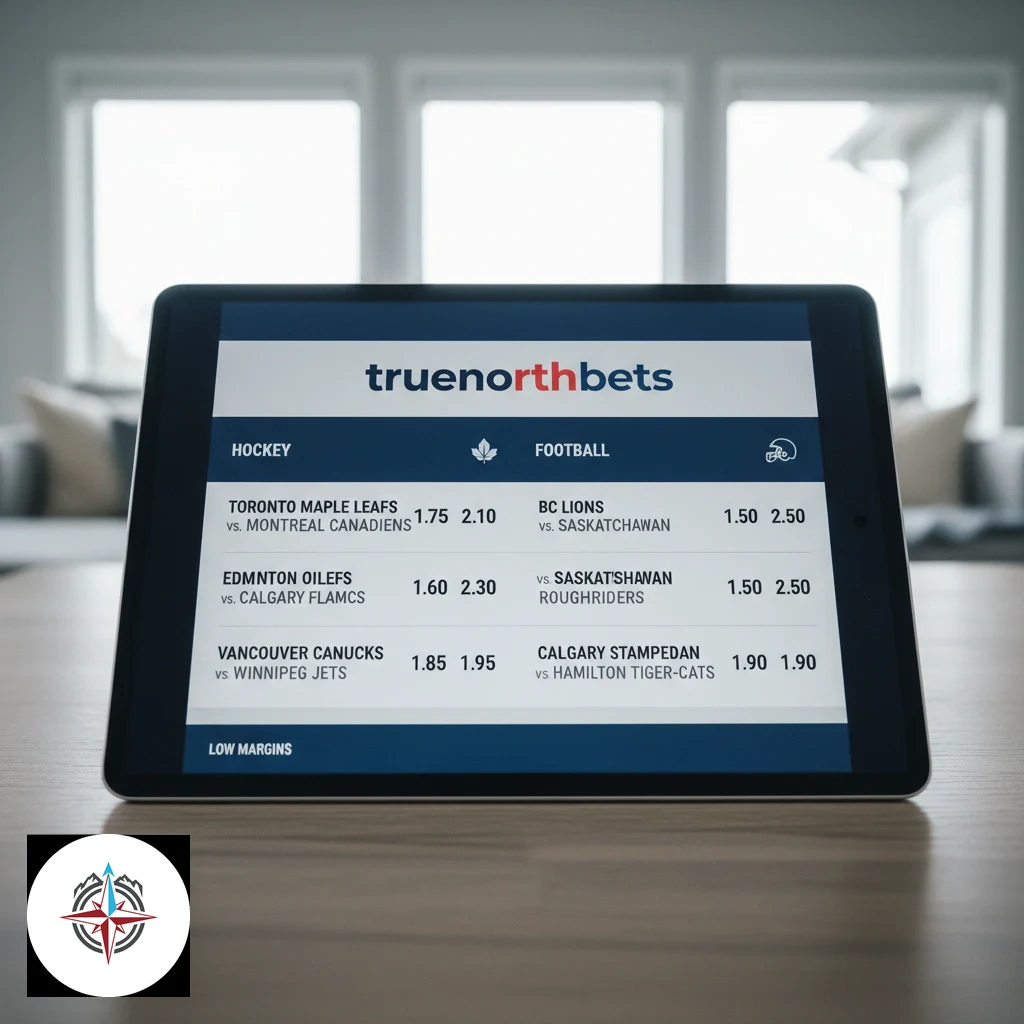
New Sports Betting Sites
New sports betting sites in Canada compared: payout speeds, odds margins, and verified sportsbook bonus offers.
Core Features of New Sportsbooks
Market Depth and Pricing
Competitive pricing on NHL and NFL lines often cuts bookmaker margins down to 3.5% or lower.
In-Play Live Wagering
Real-time match trackers with sub-second odds updates cover soccer, tennis, and basketball games.
Fast Canadian Banking
Instant CAD deposits via Interac e-Transfer alongside credit cards and digital currency withdrawals.
Responsive Mobile Apps
Streamlined mobile web clients and native apps deliver rapid navigation during peak evening games.
Clear Bonus Conditions
New operators compete with matched first deposits and reasonable rollover terms from 5x to 10x.
Extensive Esports Coverage
Extensive pre-match and live map markets for Counter-Strike 2, Dota 2, and League of Legends.
Evaluating New Sportsbooks
Ontario AGCO Compliance
Operators hold valid AGCO registration and follow mandatory player fund segregation rules.
Instant Interac Payouts
Direct banking via Interac e-Transfer and iDebit settles CAD withdrawals in under 2 hours.
Reduced Juice Pricing
Standard point spreads open at -105 or -107 juice rather than typical -110 market pricing.
Deep Micro-Betting Lines
In-play engines offer next-pitch, next-drive, and live player prop markets every quarter.
Native Mobile Applications
Fast iOS and Android apps deliver full cashier access, push alerts, and face ID sign-in.
Same-Game Parlay Engines
Custom multi-leg builders allow correlated player props across NFL, NHL, and NBA matches.
Transparent Rollover Terms
Promotional playthrough terms average 5x on sports wagers with explicit 30-day deadlines.
Real-Time Cashout Tools
Full and partial early settlement options run automatically on active pre-match parlays.
Evaluating New Sportsbooks: Key Advantages and Drawbacks
Key Advantages
Competitive Promotional Terms
New entrants frequently compete for market share by offering higher deposit matches, lower rollover multipliers (such as 5x instead of 10x), and enhanced odds boosts. Review our sportsbook bonus guide to calculate the real value of rollover requirements.
Modern Software and Feature Sets
Platforms launched recently avoid legacy codebases, delivering faster page loads, integrated same-game parlays, and responsive interfaces optimized for dedicated sports betting apps across iOS and Android.
Targeted Canadian Banking Options
Emerging brands entering the Canadian space typically integrate Interac e-Transfer, Gigadat, and CAD-denominated balances immediately to eliminate 2.5% to 3.5% foreign exchange fees on deposits and withdrawals.
Willingness to Match Local Market Demand
New operators often study which leagues Canadian bettors follow most closely before launch, so CFL, NHL, and MLS coverage tends to arrive with deeper market counts than at brands that expanded into Canada as an afterthought.
Potential Drawbacks
Unproven Long-Term Track Record
A newly launched platform lacks an established history of dispute resolution, liquidity stability, and rapid withdrawal processing during high-volume events like the Super Bowl or Stanley Cup playoffs.
Conservative Staking and Payout Limits
Early-stage operators often limit their financial exposure by setting lower maximum bet sizes on secondary markets and imposing weekly withdrawal caps until their risk management models stabilize.
Fewer Native Live Streaming Feeds
Securing rights for live broadcasts requires major capital, meaning new sites often rely on match visualization radars rather than full video feeds within their live betting markets.
Slower Loyalty and VIP Program Rollout
A brand that just opened its doors rarely has a mature VIP tier structure. Reward multipliers, dedicated account managers, and event invitations typically take a year or more to develop, so frequent bettors may find loyalty perks thinner than at established books.
User Interface and Canadian Navigation
Newer operators entering the Canadian market typically prioritize clean layout architecture and lower latency on desktop and mobile browsers alike. TrueNorth.bet organizes its catalog with immediate top-level access to core regional competitions—including NHL moneyline boards, CFL point spreads, and MLS fixtures—alongside global soccer and tennis fixtures.
A persistent bet slip anchors the right sidebar, letting you track singles, parlays, and round robins while continuing to monitor fluctuating live betting lines. For players who frequently place wagers from phones or tablets without downloading standalone sports betting apps, the responsive web interface preserves full account access, instant cash-out toggles, and CAD deposit processing via Interac.
Search functionality matters. A well-built navigation bar lets a user jump from a Leafs game to a specific player prop in two clicks, without scrolling through unrelated soccer fixtures from another continent. Sites that group markets by province-relevant leagues first, then international competitions second, save time during a busy Saturday slate.
Evaluating Odds Margins and Market Depth
Two pricing factors matter: the house edge (overround) and the breadth of betting markets. In major North American leagues like the NHL, CFL, and NFL, established operators generally hold a 4.5% to 5.5% margin on standard point spreads and totals (-110 on both sides equates to a 4.76% vigorish). Competitive entrants frequently trim these margins down to 3.0% or 3.5% (offering -105 to -107 pricing) to draw volume and build market liquidity.
Catalogue depth separates basic platforms from strong ones. Comprehensive sportsbooks deliver over 200 distinct selections per fixture, spanning player micro-props, alternate handicaps, and period totals. Data feeds also decide how well a brand handles
live betting markets without frequent line suspensions or extended bet-acceptance delays.
Essential Modern Betting Features
Same-Game Parlays & Bet Builders
A standard Bet Builder or Same-Game Parlay (SGP) engine allows Canadian bettors to combine multiple selections from one fixture into a single correlated slip. For instance, in an NHL matchup between the Toronto Maple Leafs and Montreal Canadiens, a user can combine the moneyline, total goals (Over 5.5), and an anytime goalscorer prop. Top-tier engines calculate correlated odds on the fly without locking markets and also work inside live betting platforms.
Cash Out Options & Risk Management
Early settlement tools give bettors direct control over open tickets before the final whistle. A complete interface offers three distinct mechanisms: Full Cash Out (closing the entire stake based on real-time market value), Partial Cash Out (securing a portion of returns while keeping remainder active), and Auto Cash Out (setting automated profit thresholds or loss triggers). This helps most on mobile sports apps during fast fourth quarters or late-game power plays.
Live Betting Engine and In-Play Markets
In-play wagering puts the heaviest strain on a bookmaker's technical stack. Testing measures pricing refresh intervals and suspension rates during critical phases of play. Quality in-play betting platforms update odds within 1 to 2 seconds of match events and avoid long bet lockouts.
Granular micro-markets sit alongside standard spreads and moneylines. Bettors can wager on next-possession outcomes, next-pitch results in baseball, or precise point sequences in tennis. Real-time trackers and continuous cash-out values, including in mobile betting applications, replace video when streaming rights are unavailable.
Evaluating Integrated Casino Sections
Slot Game Selection and Providers
The connected casino lobby shows how much a platform has invested. Studio partnerships say more than total title counts. Quality operators secure titles from established developers such as NetEnt, Microgaming, Pragmatic Play, and Play'n GO. These providers maintain certified RNG configurations and transparent Return to Player (RTP) rates, typically averaging between 95% and 97% on standard releases. A practical lobby layout also includes volatility tags, search filters for bonus mechanics, and clear demo modes before real funds are wagered alongside your sportsbook bonus balance.
Live Dealer Tables and Streaming Quality
Tier-one platforms rely on established streaming providers like Evolution Gaming, Ezugi, and Pragmatic Play Live to run dedicated tables. Standard lobbies host multiple variants of European roulette, standard and infinite blackjack, and baccarat with stake minimums starting at $0.50 up to high-limit seats. Look for low-latency HD streams that run consistently on mobile browsers, alongside multi-angle coverage and interactive live chat moderation. Live betting sites reviews show how the same operator performs under load.
Canadian Banking and Payout Speeds
Payment flexibility is a primary benchmark for new market entries. Native banking integration decides how quickly funds move in and out. The standard setup across competitive books includes Interac e-Transfer alongside credit and debit rails from Visa and Mastercard, plus direct bank intermediaries like iDebit and INSTADEBIT.
Deposits should settle instantly with low entry thresholds, typically starting at $10 to $20 CAD. Payout speed varies considerably: automated Interac withdrawals usually clear within 2 to 24 hours after identity verification, whereas traditional card refunds take 2 to 5 business days. Operators supporting cryptocurrency payments can shorten cashout windows to under an hour.
Before claiming any sportsbook bonus, check the cashier terms for hidden transaction fees or daily withdrawal limits. Reputable platforms operate in CAD natively, avoiding currency conversion charges.
Mobile Betting: Apps vs. Mobile Browser
Dedicated iOS & Android Apps
Native sports wagering applications downloaded through the Apple App Store or Google Play provide optimized execution tailored to mobile operating systems. Key functional benefits include integrated biometric authentication (Face ID, Touch ID), background data syncing, and instant push notifications for line movements, cash-out changes, or settled slips. Regulated Canadian operators integrate geolocation SDKs directly into the client package for compliant location verification. The primary trade-offs are local storage consumption (typically between 120 MB and 300 MB) and recurring software updates. Bettors prioritizing rapid bet submission often choose dedicated sports betting apps for regular weekly use.
Browser-Based Mobile Platforms
Responsive web applications built on modern HTML5 frameworks run directly inside mobile browsers like Safari, Chrome, and Firefox without requiring manual downloads or device memory. Responsive interfaces dynamically reformat markets, odds grids, and cashier modules to fit smartphone screens. Geolocation checks execute via standard browser location prompts rather than background system services. While web versions offer complete device compatibility across both older and newer hardware, they lack native notification hooks and can experience background tab timeouts during extended coverage of fast-paced live betting markets.
Customer Support Standards and Response Times
Support at newer sportsbooks is judged on actual response time and competence, not advertised availability. Top-tier platforms implement 24/7 live chat services with median queue times under two minutes, backed by dedicated email ticketing queues for account verification (KYC) and transaction reconciliations.
Reliable platforms also keep knowledge bases on settlement rules, withdrawal timelines, and
responsible gambling limits. Operators with dedicated sports betting apps add in-app messaging to resolve bet slip discrepancies without exiting active live matches.
Commitment to Responsible Gaming
Regulated operators in Canada must uphold strict consumer protection standards set by provincial bodies like the Alcohol and Gaming Commission of Ontario (AGCO) and iGaming Ontario (iGO). A credible new bookmaker puts safety controls in the account dashboard, not behind support tickets.
Standard player controls include customizable deposit limits calculated over 24-hour, 7-day, or 30-day windows, session timers that force automatic timeouts, and strict loss thresholds. Players also have access to temporary cooling-off periods lasting from 24 hours to 3 months, alongside full self-exclusion protocols. The
responsible gambling guide covers budgeting and regional support resources such as ConnexOntario (1-866-531-2600) and the Responsible Gambling Council.
What Should Bettors Check Before Registering at New Sports Betting Sites?
Before creating an account, confirm the operator carries an active provincial or Indigenous gaming license. A registration number displayed in the footer is a quick first check. Search the license number against the regulator's public database rather than trusting a logo alone.
Next, scan the terms page for withdrawal caps and processing windows stated in plain language. A trustworthy new book lists specific numbers, such as a $5,000 weekly Interac limit, instead of vague phrases like "standard processing times apply." Vague wording usually signals a policy that changes case by case.
Finally, test the support channel with a simple question before depositing. A quick, specific answer from a live agent says more about a platform's readiness than any promotional banner. Pair that check with a look at our
sportsbook comparison for a wider view of how new entrants stack up against established names.
How Do New Sportsbooks Handle Verification and Account Limits?
Identity Verification Timelines
Know Your Customer checks confirm age, address, and payment ownership before a first withdrawal clears. Automated systems that cross-reference government ID scans and utility bills typically finish within minutes. Manual review queues, common at smaller new operators during launch week, can stretch to 24 or 48 hours. Submitting a clear photo ID and a recent bank statement upfront avoids most delays. Bettors who plan to withdraw quickly after a big NHL parlay should complete verification the same day they register, well before placing a wager.
Deposit and Wagering Limit Tools
Newer platforms increasingly build limit-setting tools directly into account settings rather than requiring a support ticket. A bettor can cap daily deposits, set a maximum single-bet stake, or restrict monthly losses to a fixed CAD figure. These controls sit alongside the broader responsible gambling framework mandated by provincial regulators. Checking these settings during onboarding, not after a losing week, shows how the operator treats account safety.
Final Assessment of New Canadian Bookmakers
New entrants are judged on operations, not launch marketing. TrueNorth.bet shows strength in regional market coverage, particularly competitive puck line pricing on NHL fixtures and standard 20-cent margins across CFL matchups. Native Interac e-Transfer handles CAD deposits without processing fees, and withdrawals clear within 24 to 48 hours.
Before registering, bettors should verify regulatory compliance and review active
sportsbook bonus terms to calculate true rollover requirements. Comparing new entries with established
live betting sites or
crypto betting platforms shows whether a fresh bookmaker fits the required limits and payment rails.
None of this replaces a bettor's own judgment. A sportsbook can hold a clean license and still fall short on customer service, or run tight margins while capping payouts on winning weeks. Treat any comparison, including this one, as a starting point rather than a final verdict, and re-check licensing status and posted terms periodically, since new operators do revise their policies as they mature.
New Sportsbook FAQ
How can Canadian bettors verify if a new sports betting site is licensed and legal?
Legal requirements in Canada depend on provincial jurisdiction. Bettors residing in Ontario should confirm registration with the Alcohol and Gaming Commission of Ontario (AGCO) and iGaming Ontario (iGO), whereas players in other provinces frequently access sportsbooks licensed by bodies like the Kahnawake Gaming Commission or Malta Gaming Authority. For an overview of provincial compliance, check our
legal betting guide.
What advantages do newly launched sportsbooks offer over established bookmakers?
Emerging operators regularly introduce reduced betting margins—frequently between 3% and 4.5% on NHL, NFL, and NBA main lines—to attract volume from legacy books. They also implement updated trading software with granular same-game parlays, instant cash-out calculations, and responsive UI frameworks designed for low-latency market updates.
Which payment methods are standard at new Canadian sportsbooks?
Most modern platforms integrate direct domestic rails including Interac e-Transfer, iDebit, and Instadebit alongside major credit cards. Several operators operating in the wider Canadian market also provide blockchain settlement; see our guide to
crypto betting options for platforms handling Bitcoin, Ethereum, and stablecoin deposits without intermediary banking delays.
How do in-play betting engines perform on newly developed platforms?
Recent sportsbooks typically rely on low-latency data feeds from suppliers like Sportradar and Genius Sports, providing rapid odds recalibration and sub-second bet acceptance for live markets. Suspension windows between goals or points usually last only a few seconds on well-built platforms, rather than the 20 to 30 second freezes common on older engines. Latency benchmarks are on the live betting sites page.
Do brand new sports betting sites provide dedicated mobile applications?
New operators frequently launch with lightweight Progressive Web Apps (PWAs) alongside native iOS and Android binaries, allowing rapid page caching and full market access through mobile browsers without consuming device storage. Download options and navigation speed are covered in the sports betting apps review.
What terms should I examine when reviewing welcome bonuses at a new sportsbook?
Review the playthrough requirements (fair standards are 5x to 8x the bonus amount), the minimum qualifying odds (typically 1.50 to 1.80 decimal), and the expiration window (often 14 to 30 days). Also check whether the offer pays out as a lump sum or in staggered free bet increments, since split releases delay access to any winnings. Current terms are compared in the sportsbook bonus guide.
Are withdrawal speeds faster on new sports betting platforms?
Modern platforms use automated identity verification (KYC) APIs and instant payment processors, cutting processing times from multiple banking days to under 2 hours for Interac e-Transfers and under 15 minutes for supported digital currency payouts once an account is verified. Card refunds still move slower, usually landing within 2 to 5 business days. First withdrawals often take longer, since the initial KYC check adds a manual review step.
Should bettors wait before joining a brand new sportsbook?
Waiting a few months after launch lets a bettor read early withdrawal reports and support reviews from other players. Odds and bonus terms rarely change dramatically in that window, but complaint patterns around delayed payouts or frozen accounts usually surface quickly if a book has operational problems.
How does customer support quality differ at newly launched sportsbooks?
Support desks at new operators tend to run leaner teams, so live chat queues can run longer during marquee events like Grey Cup weekend. Response times often improve within the first few months as the operator hires more agents and refines its ticketing system. Check whether a platform publishes typical response times and offers a dedicated escalation path for account verification issues before signing up.
About the Author
This page is prepared and checked by the Editorial Team, not by a single named author. Figures come from funded test accounts, scored under the
rating methodology and verified through
licence checks. Reported errors are re-tested before any correction goes live.
Team background, the testing process and contact details are on the
Editorial Team page.